
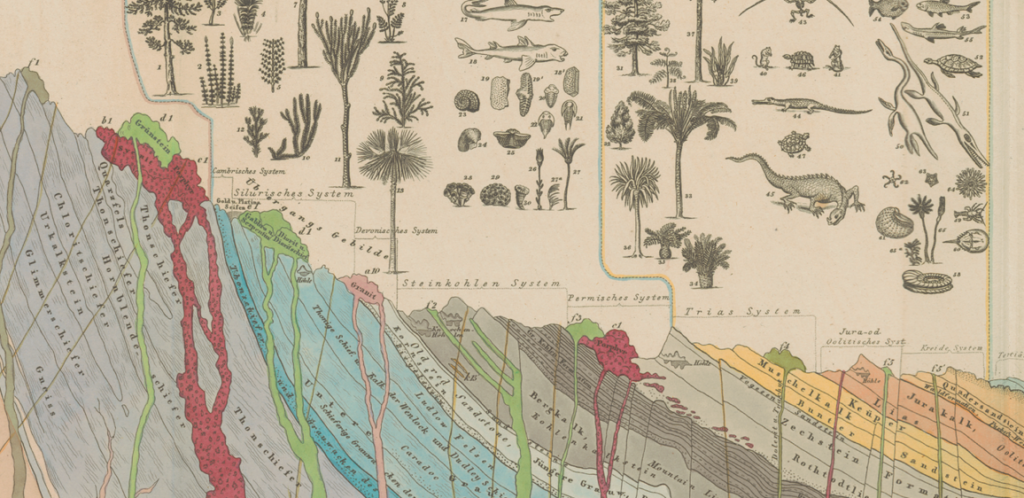
Think of Earth’s surface as a giant plumbing system. Mountains rise, rivers cut them down, and sediment flows to the ocean, carrying nutrients and carbon with it. How that system has behaved over geological time shapes the climate, the oceans and life itself. These three studies follow the flow at global scale.
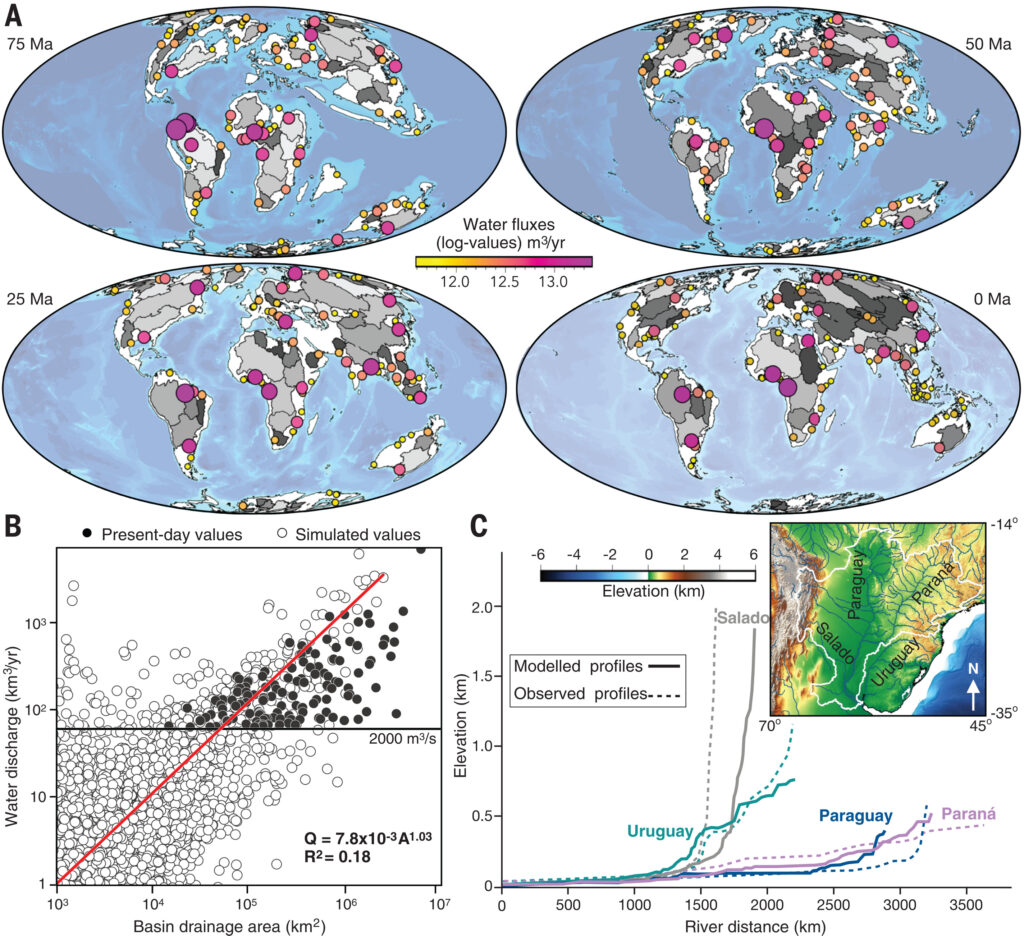
Science · March 2023
Rewinding the planet, 100 million years in high definition
What did Earth’s rivers and basins look like before the Himalayas stood tall? We built the first dynamic global model of the past 100 million years, at 10 km resolution and in one-million-year frames. It follows water and sediment from catchments to ocean basins, and shows where the geological record and our reconstructions don’t quite agree. The maps are open to everyone.
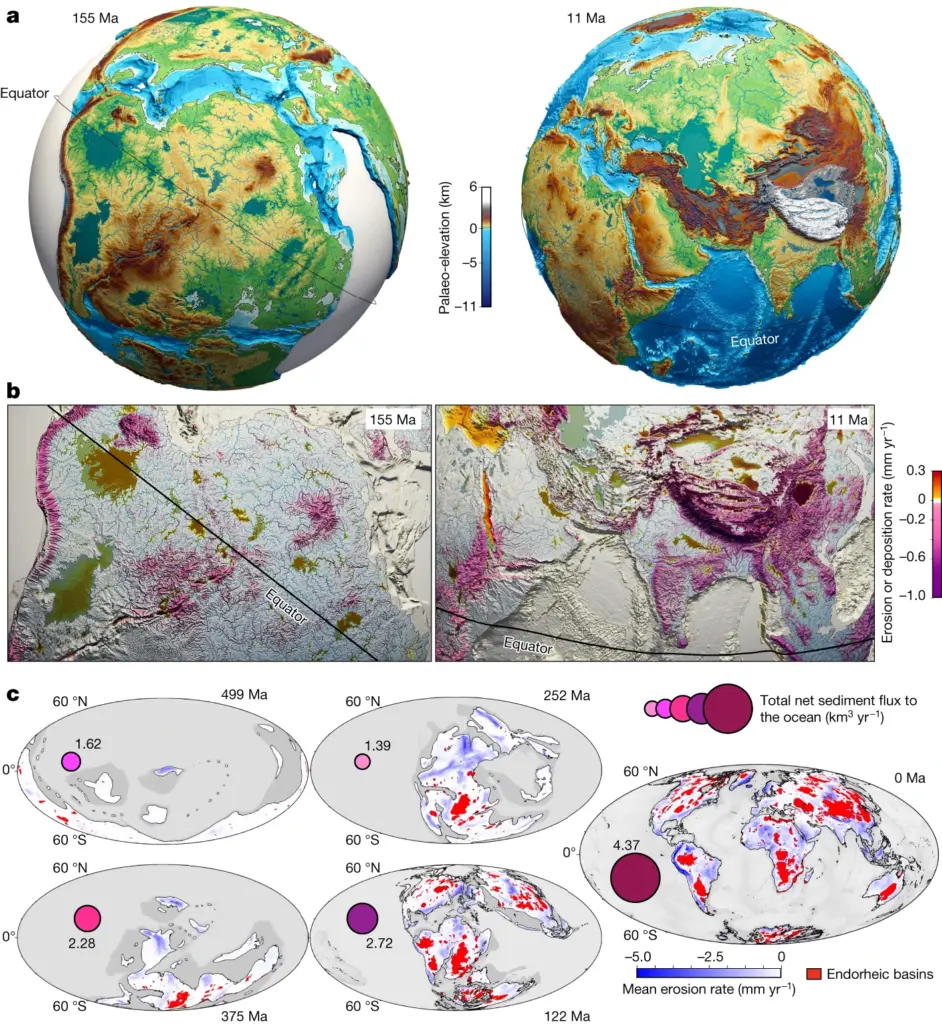
Nature · November 2023
Rivers set the menu for life
Push the same model back across 540 million years and a pattern shows up: life follows the sediment. In the oceans, diversity rises and falls with the nutrients rivers deliver. On land, plants had to wait for thick, sediment-rich soils before they could really take off. The shape of the landscape, it turns out, sets the carrying capacity of the biosphere.
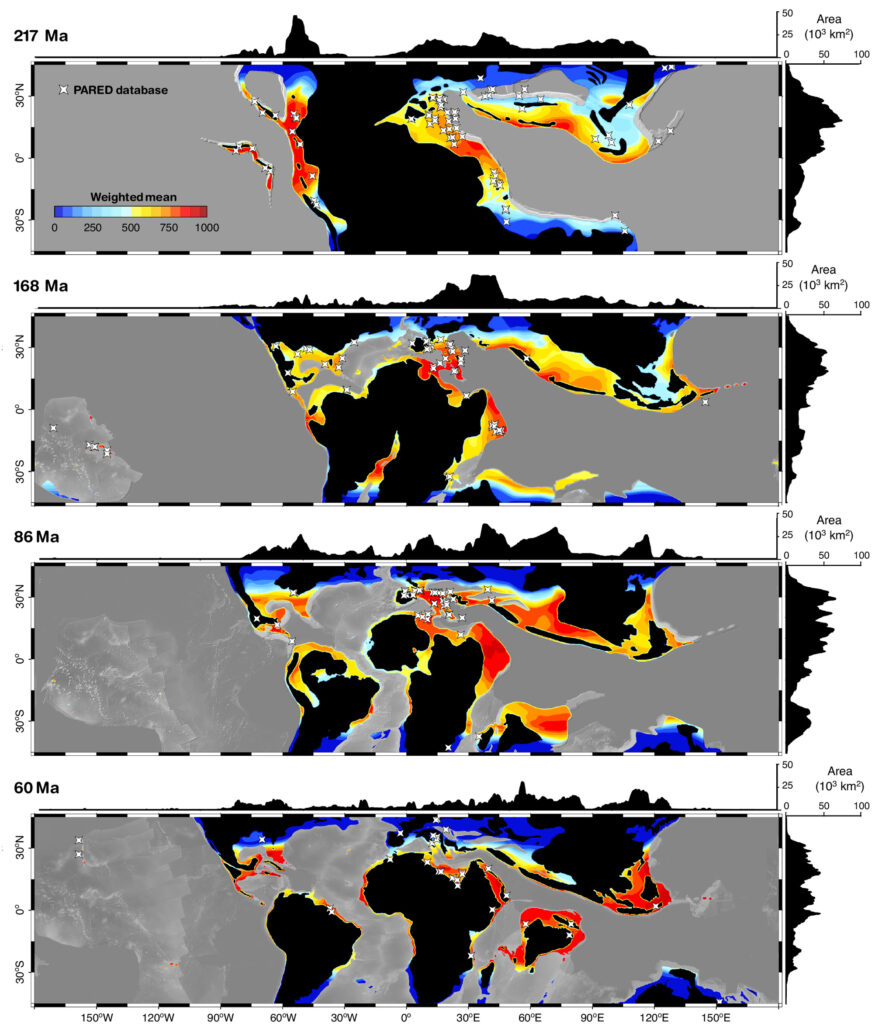
PNAS · December 2025
Reefs set the tempo of climate recovery
Follow the sediment to the sea and you meet the carbonate factories: coral reefs and shallow platforms. Over 250 million years, the Earth system flipped between two modes. When shallow reef space was wide open, the ocean recovered slowly from carbon dioxide shocks. When that space collapsed, carbonate burial moved to the deep sea and recovery sped up. It is a long view of why today’s reef decline matters.