Visualise, analyse & extract geochemistry data from around the globe
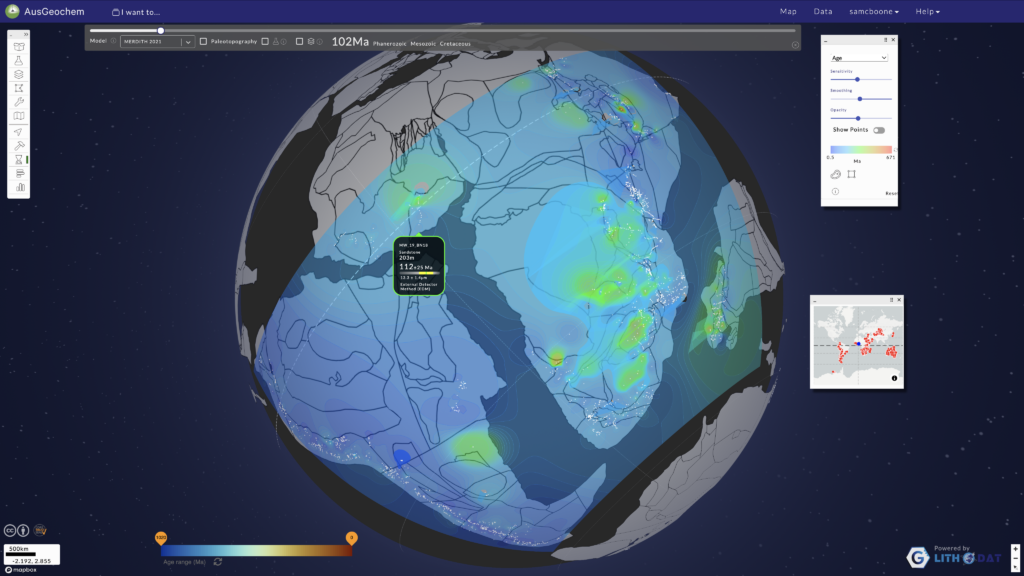
To promote a more efficient and transparent geochemistry data ecosystem, a consortium of Australian university research laboratories called the AuScope Geochemistry Network assembled to build a collaborative platform for the express purpose of preserving, disseminating and collating geochronology and isotopic data around the globe. In partnership with geoscience-data-solutions company Lithodat Pty Ltd, the open, cloud-based EarthBank platform (previously called AusGeochem) was developed to simultaneously serve as a geosample registry, a geochemical data repository and a data analysis tool.
Informed by method-specific groups of geochemistry experts and established international data reporting practices, community-agreed database schemas were developed for rock and mineral geosample metadata and a range of geochronological, thermochronological, and isotopic, major and trace element geochemical techniques. These include major and trace element geochemistry, isotope geochemistry, U-Pb, Ar-Ar and Lu-Hf geochronology, fission track and (U-Th)/He thermochronology, thermal history models, and mineral deposit occurrences, with new data models being developed and released all the time.
In addition to working with the wider AuScope Geochemistry Network to continue developing and maintaining the EarthBank platform, the University of Sydney EarthBank node led by QuESt Lab’s Dr Samuel C Boone and Dr Kai Li develops open numerical workflows linking EarthBank’s global geochemistry data with tectonic reconstructions, thermo-mechanical simulations and landscape evolution models.
Outputs
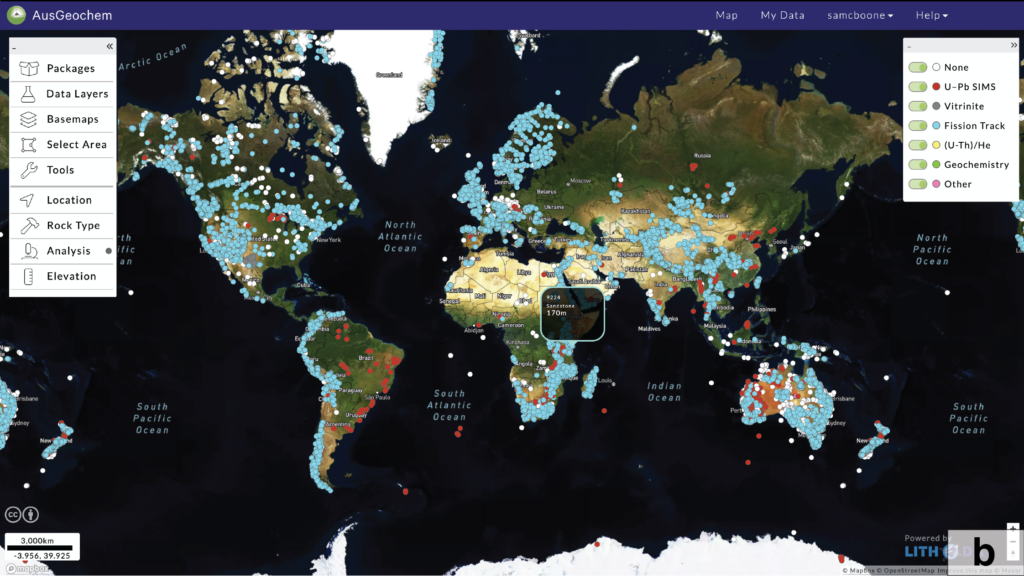
The EarthBank Platform
The EarthBank platform (previously AusGeochem) provides the geochemistry community with a new, dynamic resource to help facilitate FAIR (Findable, Accessible, Interoperable, Reusable) data management, streamline data dissemination and advanced quantitative investigations of Earth system processes. By systematically archiving detailed geochemical (meta-)data in structured schemas, intractably large datasets comprising thousands of analyses produced by numerous laboratories can be readily interrogated in novel and powerful ways. These include rapid derivation of inter-data relationships, facilitating on-the-fly data compilation, analysis and visualisation.
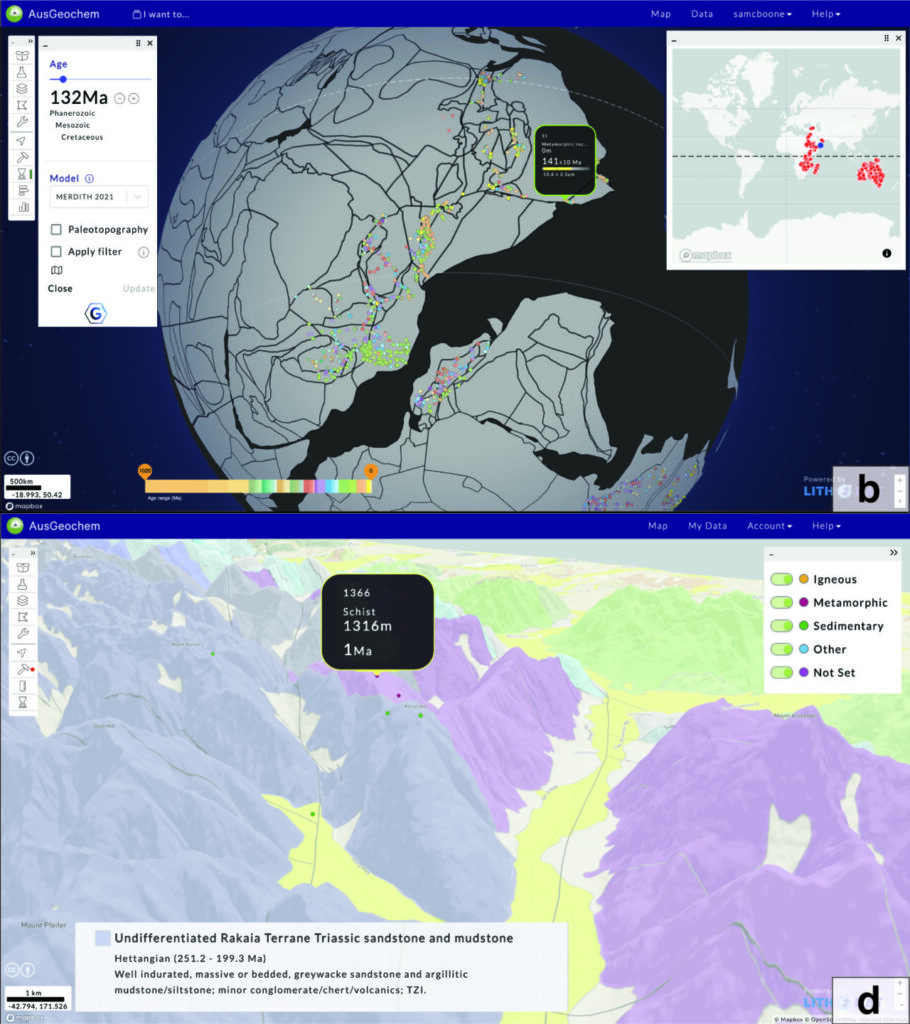
A geospatial platform for the tectonic interpretation of low-temperature thermochronology Big Data
Low-temperature thermochronology is a powerful tool for constraining the thermal evolution of rocks and minerals in relation to a breadth of tectonic, geodynamic, landscape evolution, and natural resource formation processes through deep time. However, complexities inherent to these analytical techniques can make interpreting the significance of results challenging, requiring them to be placed in their geological context in 4-dimensions (3D + time). We present a novel tool for the geospatial archival, analysis and dissemination of fission-track and (U-Th)/He data, built as an extension to the open-access EarthBank platform.
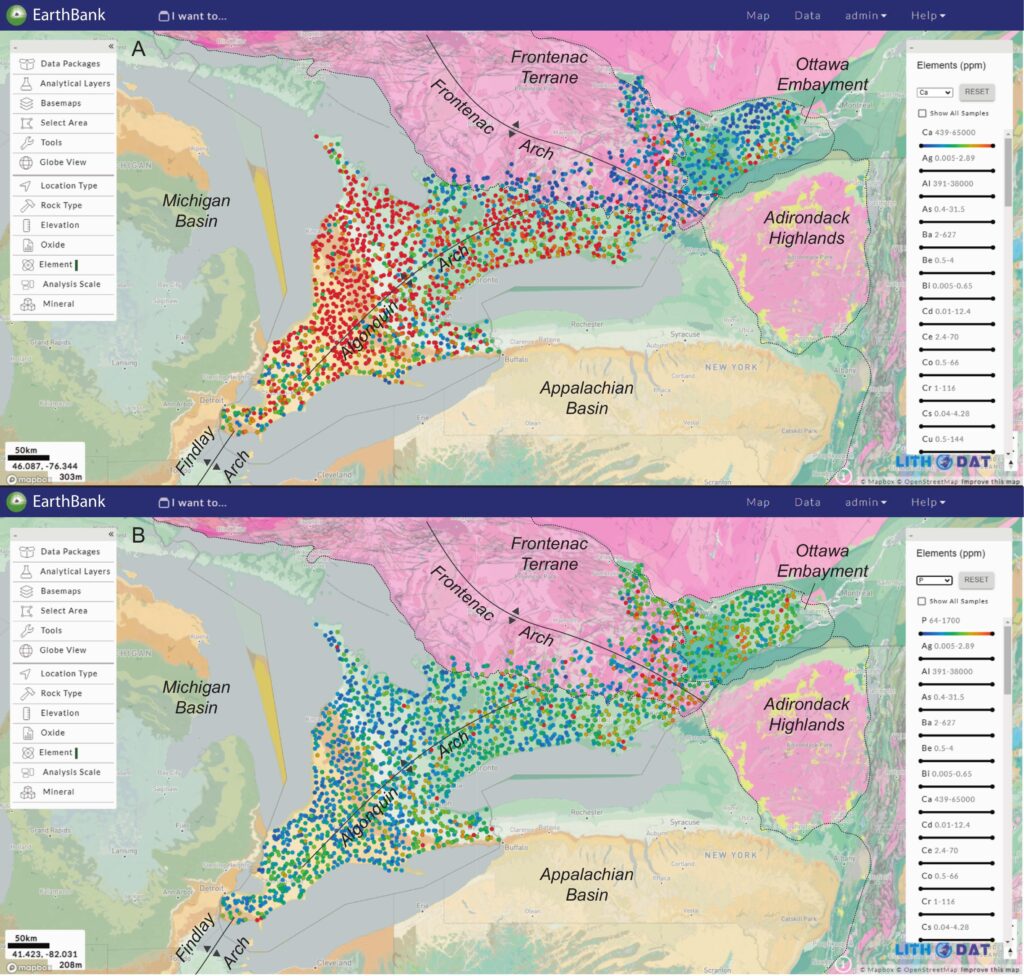
FAIR geochemistry framework for major and trace element data
Major, minor and trace geochemistry is perhaps the most commonly collected form of analytical data within the Earth sciences, either as the sole approach to a research question or to supplement other methods such as geochronology, thermochronology or isotopic studies. Here we propose a new, flexible inorganic geochemistry reporting schema available within the open access EarthBank platform, as a service to store, interpret, disseminate and explore geochemistry data.